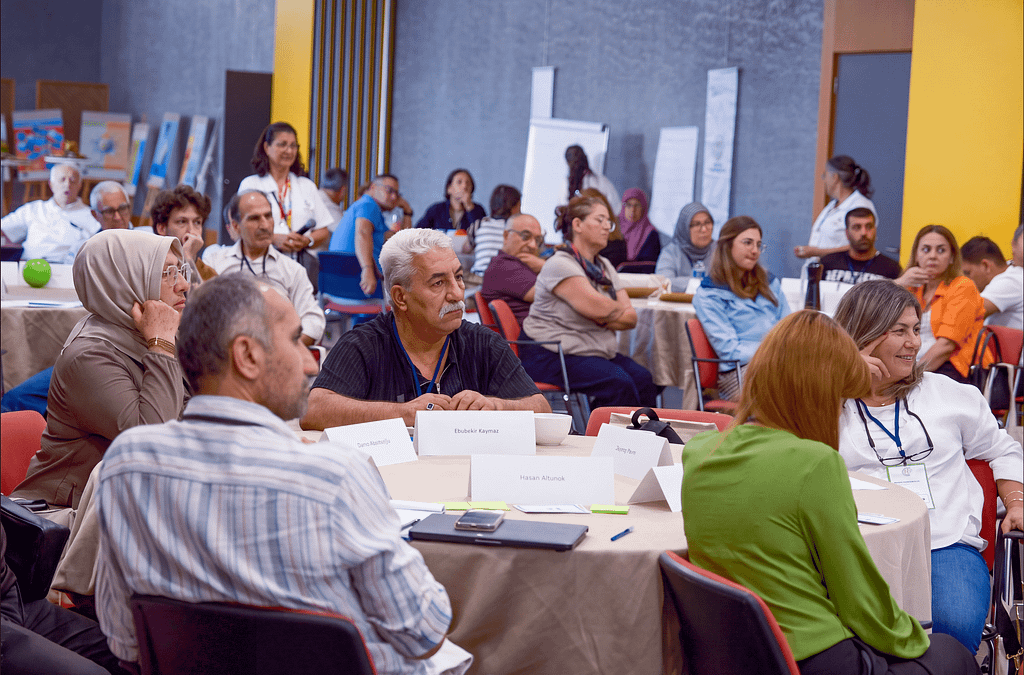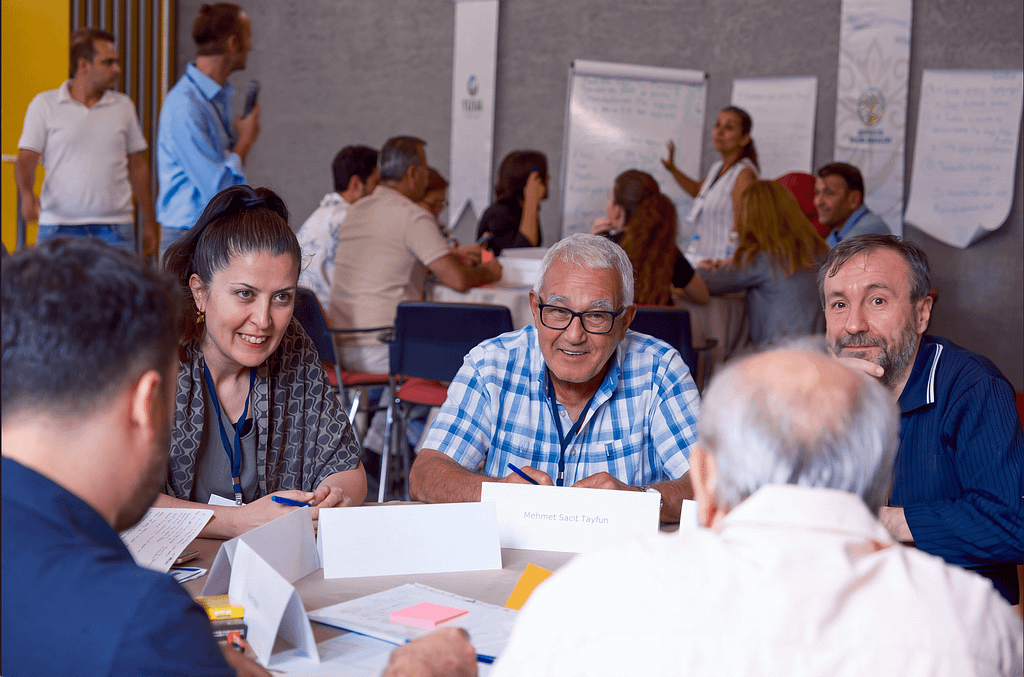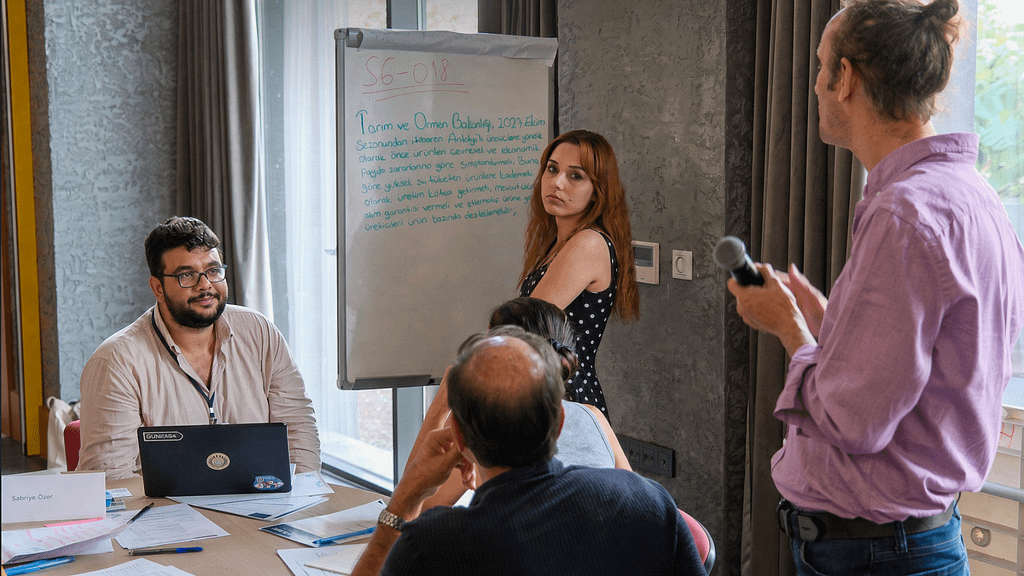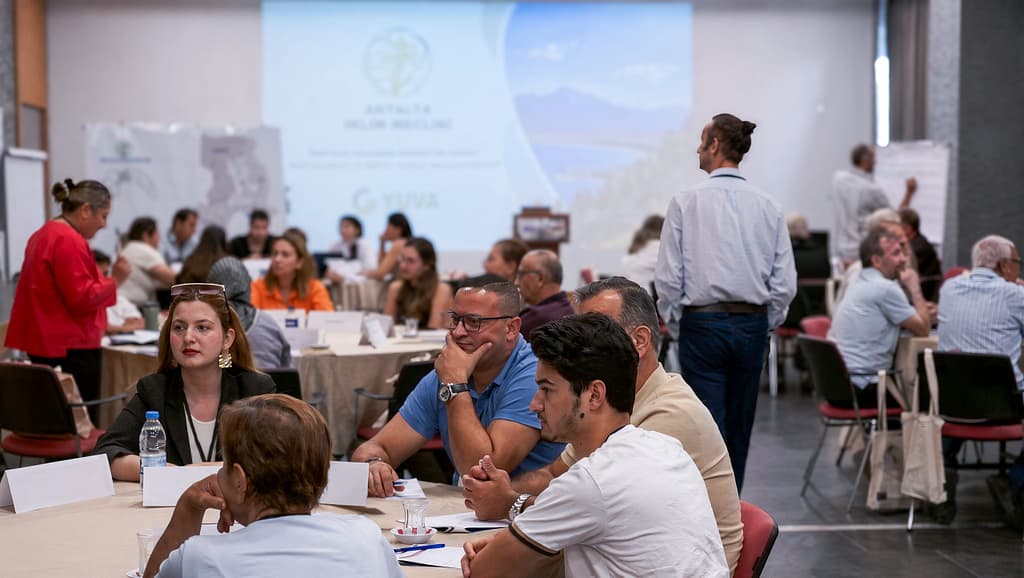

As the effects of the climate crisis become more visible with each passing day, a new participatory process is launching in Antalya where citizens can share their views and suggestions on climate policies. As part of the Antalya Citizens’ Assembly for Climate Project, led by the Yuva Association with support from the European Climate Foundation (ECF), 50 randomly selected citizens who will represent Antalya will come together.

The Antalya Climate Citizens’ Assembly builds on the success of the İzmir Climate Citizens’ Assembly, which was implemented by YUVA Association last year and received international recognition for its innovative approach to participatory democracy. In İzmir, citizens came together to answer the question: “How can we survive in a warming İzmir?” Throughout the process, participants attended expert presentations on topics such as nature-based solutions, water management, and public health, while structured table discussions enabled people with diverse perspectives to deliberate and develop shared solutions. As a result, 30 citizen recommendations for İzmir’s climate future were developed and prioritized. The project also produced a Recommendations Report, an Implementation Guide, and an introductory video documenting the assembly process.

Recognized as an exemplary initiative in the fields of citizen participation and democratic innovation, the project received both the Nets4Dem Impact Award and the European Association for the Education of Adults (EAEA) Grundtvig Award. Building on the experience and lessons learned in İzmir, the Antalya Climate Citizens’ Assembly seeks to adapt this model to Antalya’s local context and develop inclusive, practical recommendations for the city’s climate future.

Assembly members will be selected from applicants living in Antalya’s five central districts—Muratpaşa, Konyaaltı, Kepez, Aksu, and Döşemealtı. Participants will not be chosen on a first-come, first-served basis. Instead, they will be selected through a random and representative selection process that takes into account age, gender, district of residence, educational background, and socioeconomic diversity. This approach aims to ensure that the Assembly reflects, as closely as possible, the social diversity of Antalya’s five central districts.

Throughout the process, participants will receive balanced information from experts, academics, and relevant stakeholders. They will examine the impacts of climate change on Antalya, discuss potential solutions, and identify priority areas for action. At the conclusion of the Assembly, the recommendations developed by participants will be compiled into a report and shared with the public as well as relevant institutions.

The Antalya Climate Citizens’ Assembly will consist of five meeting days held in Konyaaltı. The process will begin on 26 September, continue on 27 September, 10 October, and 11 October, and conclude with a final session on 24 October. Following the final meeting, the citizens’ recommendations will be consolidated into a report and presented to the public.

Citizens’ assemblies are increasingly being adopted around the world as an innovative participatory democratic tool for addressing complex societal challenges. By bringing together people with diverse life experiences in a structured and inclusive dialogue, the Antalya Climate Citizens’ Assembly aims to contribute to the development of constructive, evidence-informed, and actionable recommendations for Antalya’s climate future.
Mission of Antalya Citizens' Assembly for Climate

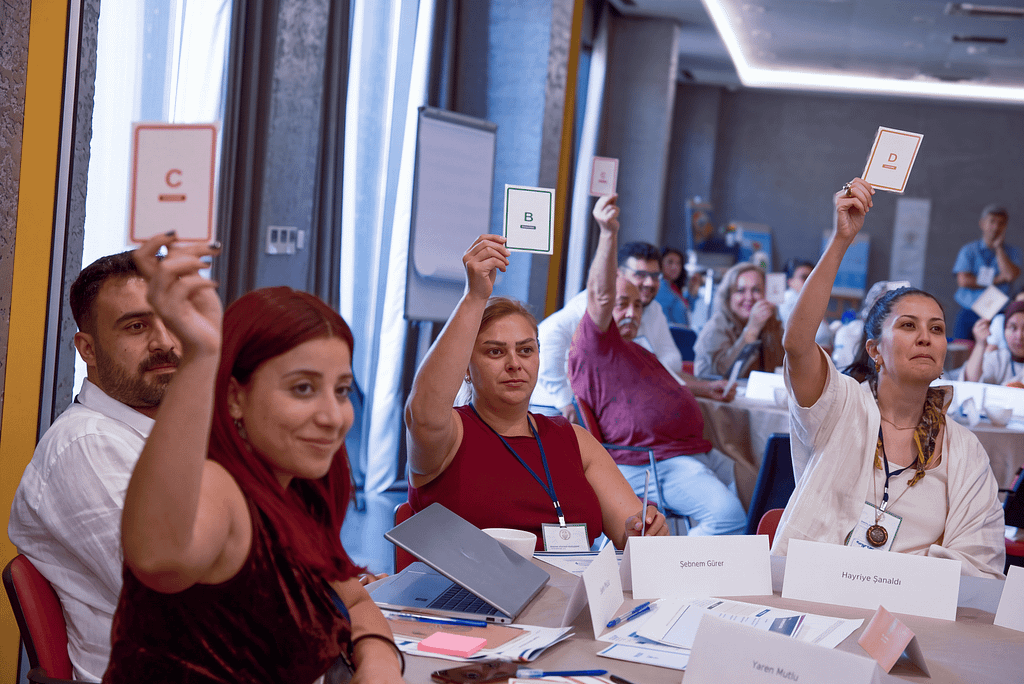
The Antalya Climate Citizens’ Assembly is a participatory democratic process established to foster collective decision-making on the future of Antalya’s water resources. Its primary purpose is to bring together diverse perspectives from across society to examine the impacts of climate change on the city’s water systems, engage in evidence-based deliberation, and develop practical policy recommendations. Rather than being a series of discussion meetings, the Assembly is a structured process in which citizens from different age groups, genders, educational backgrounds, and professions participate on an equal footing, learning from one another while jointly developing recommendations.

Throughout the Assembly, participants will receive balanced information from experts on topics including climate change, water management, agriculture, tourism, urban development, and ecosystems. They will listen to different viewpoints and work in small facilitated groups to develop shared solutions. Facilitators will ensure that every participant has an equal opportunity to contribute, while remaining strictly neutral and refraining from influencing the content of discussions or the decisions reached. As a result, the Assembly’s recommendations will emerge from the collective deliberation of participants rather than from any institution or expert.

The Assembly’s final output will be a Citizens’ Recommendations Report containing proposals for protecting and managing Antalya’s water resources fairly and sustainably in the face of climate change. The report will be shared with public institutions, local authorities, civil society organizations, and the wider public, with the aim of informing future policies and action plans. The Antalya Climate Citizens’ Assembly does not have decision-making authority, nor are its recommendations legally binding. Instead, its role is to combine the lived experiences of citizens with scientific knowledge in order to generate well-informed, inclusive, and broadly legitimate recommendations for decision-makers. In doing so, the Assembly seeks to contribute to more participatory, transparent, and democratic decision-making on the future of Antalya’s water resources.

Participation Process in Antalya Citizens' Assembly for Climate

The participant selection process for the Antalya Climate Citizens’ Assembly has been designed to be transparent, voluntary, and representative, with the aim of creating a balanced group of participants that reflects the diversity of Antalya’s population. The process will begin with a public call for applications. Citizens will be able to apply online through iklimmeclisleri.org and via the project’s communication campaign. To encourage broad participation, the call will be disseminated not only through social media but also through local media outlets, universities, professional associations, civil society organizations, neighbourhood administrations, and the communication networks of project partners.

To be eligible, applicants must be 18 years of age or older and reside in one of Antalya’s five central districts: Muratpaşa, Konyaaltı, Kepez, Aksu, or Döşemealtı. The application form will request only the information necessary to ensure representative participation, including age, gender, educational background, occupation, and district of residence. Participation is free of charge and entirely voluntary.

Once the application period has ended, participants will not be individually selected by the project team. Instead, a computer-assisted random selection process will be used to create a Citizens’ Assembly of 50 participants that reflects Antalya’s demographic diversity as closely as possible. Factors such as age, gender, educational attainment, and district of residence will be considered to achieve balanced representation. This approach ensures that no individual, institution, or viewpoint receives preferential treatment and that the Assembly is both fair and representative.

Selected participants will be invited to attend the Assembly sessions, which will take place on 26–27 September, 10–11 October, and 24 October. During these five meeting days, participants will hear from experts, engage in facilitated small-group deliberations, and collaboratively develop recommendations for Antalya’s water future. Throughout the process, neutral facilitators will ensure that every participant has an equal opportunity to contribute, creating an inclusive, respectful, and balanced deliberative environment.

Selection Method and Diversity of Participant Groups

© KNOCA

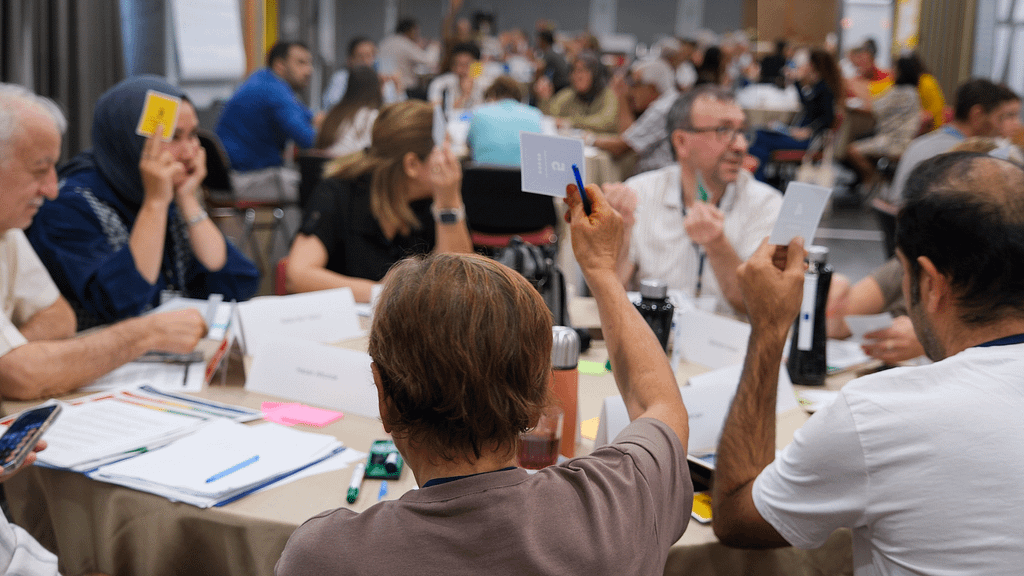
Ensuring a fair, transparent, and democratic participation process is a fundamental principle of the Antalya Climate Citizens’ Assembly. Participant selection is carried out entirely through a computer-assisted random selection system, preventing any individual or group from receiving preferential treatment. The selection process is designed to provide equal opportunities for participation while ensuring that the Assembly reflects the diversity of Antalya’s population. Participation is not limited to a particular age group, profession, or social background; instead, young people, adults, older citizens, and individuals from a wide range of socioeconomic backgrounds are all eligible to be represented.

Bringing together participants from diverse walks of life—including workers, students, academics, farmers, business owners, and retirees—helps ensure that the Assembly’s recommendations reflect the experiences and priorities of the wider community. This diversity is particularly important because climate change affects different groups in different ways. For example, a farmer in a rural area may experience the direct impacts of declining water availability, while an urban resident may be more concerned about extreme heat, rising energy demand, or the resilience of public infrastructure. Incorporating these different perspectives into the deliberation process enables the Assembly to develop more comprehensive, balanced, and effective policy recommendations for Antalya’s climate and water future.

Project Activities

The Antalya Climate Citizens’ Assembly will be conducted as a three-stage participatory process spanning five meeting days, with the aim of developing shared solutions for Antalya’s water future. Throughout the process, participants will do more than simply express their opinions—they will learn from experts, consider different perspectives, engage in structured deliberation, and jointly develop policy recommendations. All sessions will be facilitated by neutral moderators who will ensure that every participant has an equal opportunity to contribute.

During the first stage, participants will build a shared understanding of the challenges facing Antalya by attending expert presentations on climate change, the city’s water resources, water governance, and climate-related risks. They will have the opportunity to ask questions, engage directly with experts, and explore different viewpoints within an evidence-based learning environment.

The second stage will focus on deliberation. Participants will work in small groups to discuss the key challenges affecting Antalya’s water future, evaluate alternative policy options, and develop practical recommendations. Facilitators will ensure that discussions remain balanced, inclusive, and respectful, while refraining from influencing either the content of the discussions or the decisions reached. As a result, all recommendations will emerge directly from the participants’ collective deliberations.

In the final stage, the recommendations developed throughout the process will be reviewed, prioritized, and consolidated into a Citizens’ Recommendations Report. The report will be shared with local authorities, public institutions, civil society organizations, and the wider public, with the objective of informing future policies on water management and climate adaptation in Antalya. Throughout the process, updates on the Assembly’s work will be regularly communicated through its website and other communication channels, ensuring transparency while fostering a stronger culture of participatory democracy in the city.


Project Information

The Antalya Climate Citizens’ Assembly is implemented by YUVA Association with the support of the European Climate Foundation (ECF). The Assembly process will begin in September 2026 and conclude in November 2026, following a series of meetings held throughout September and October. The process will culminate in the publication of the Citizens’ Recommendations Report and the Antalya Manifesto, which will be shared with the public and relevant stakeholders. The overall implementation period is approximately three months.